
Introduction
The construction industry is constantly evolving as builders, architects, and developers look for faster, stronger, and more cost-effective ways to complete projects. Traditional construction methods are increasingly being complemented by advanced manufacturing technologies that improve efficiency, reduce material waste, and support sustainable building practices. Among these innovations, light gauge steel construction has become an important solution for residential, commercial, and industrial projects.
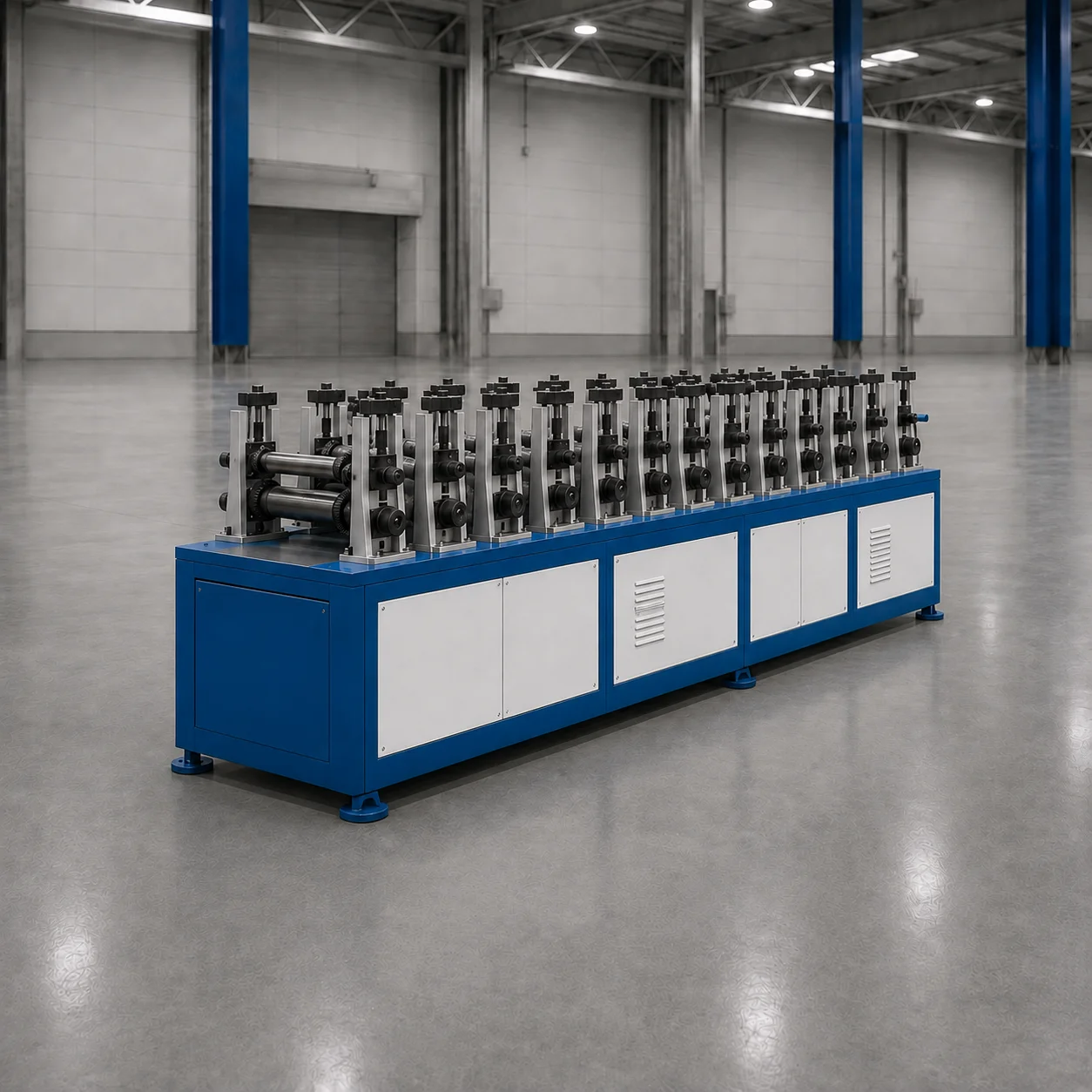
At the center of this development are light gauge steel roll forming machines, which manufacture precise steel components used in modern building systems. These machines transform steel coils into customized profiles through a continuous forming process, creating essential structural elements such as studs, tracks, channels, and framing sections. Their ability to produce consistent, lightweight, and durable components is changing how construction materials are manufactured and used.
Understanding Light Gauge Steel Roll Forming Technology
Light gauge steel roll forming is a manufacturing process that gradually shapes flat steel strips into specific profiles. The process uses a series of rollers that apply controlled pressure to the steel without removing material. As the steel passes through each roller station, it gradually takes the required shape.
How the Manufacturing Process Works
The process typically begins with a steel coil loaded onto a decoiler. The steel strip is then fed into the machine, where multiple roller stations progressively form it into the desired profile. Depending on the production requirements, additional operations such as punching, cutting, and embossing may be performed automatically.
Modern equipment often includes computer-controlled systems that allow operators to adjust dimensions, production speeds, and cutting lengths. This automation helps manufacturers maintain accuracy while producing different steel profiles for various building applications.
Precision and Consistency in Production
One of the most important advantages of roll forming technology is its ability to maintain consistent dimensions throughout production. Accurate profiles are essential in construction because even small variations can affect the alignment, stability, and installation of structural components.
Advanced machinery helps manufacturers achieve repeatable results, reducing the need for manual corrections and improving the overall quality of building materials.
Supporting Faster and More Efficient Construction
Construction schedules play a significant role in determining project costs and profitability. Delays caused by material shortages, inaccurate components, and labor-intensive processes can increase expenses and affect project completion dates.
Light gauge steel offers an opportunity to address these challenges by allowing building components to be manufactured in controlled factory environments.
Faster Component Manufacturing
Automated production enables manufacturers to produce large quantities of steel framing components within shorter periods. Once machine settings are configured, the equipment can continuously manufacture profiles with consistent dimensions.
This production capability helps construction companies receive the materials they need without depending entirely on slower traditional fabrication methods.
Simplifying On-Site Installation
Steel profiles produced by roll forming equipment can be designed for straightforward assembly. Pre-punched holes, accurately cut sections, and standardized dimensions make it easier for construction teams to connect individual components.
As a result, builders can reduce unnecessary adjustments and improve installation efficiency. This is particularly useful for projects involving repetitive structures, including housing developments, office buildings, and modular construction systems.
Improving Structural Performance and Design Flexibility
Modern buildings require materials that combine strength, durability, and design flexibility. Light gauge steel meets many of these requirements because it offers a favorable strength-to-weight ratio.
Lightweight Yet Durable Building Components
Although light gauge steel components are relatively thin, their carefully designed profiles provide structural strength for many building applications. Their lightweight characteristics also make transportation, handling, and installation more manageable.
When properly engineered and installed, these components can contribute to reliable framing systems for walls, ceilings, roofs, and partitions.
Supporting Innovative Architectural Designs
Architects and engineers increasingly use steel framing to develop modern building layouts. The flexibility of roll forming technology allows manufacturers to produce different profiles according to project specifications.
Custom dimensions and specialized shapes can support creative architectural requirements while maintaining manufacturing consistency. This makes light gauge steel suitable for both standard construction projects and more specialized building designs.
Reducing Material Waste and Supporting Sustainability
Sustainability has become a major consideration in the global construction industry. Developers are paying greater attention to material efficiency, energy consumption, and the environmental impact of building processes.
Roll forming technology contributes to these objectives by improving how steel materials are processed.
Efficient Use of Raw Materials
Unlike manufacturing methods that remove large amounts of material, roll forming shapes steel through controlled deformation. This helps minimize production waste and allows manufacturers to use steel coils efficiently.
Computerized cutting systems can also optimize profile lengths according to project requirements, reducing unnecessary offcuts.
Supporting Recyclable Construction Materials
Steel is widely recognized for its recyclability. Many steel products can be recovered and processed into new materials at the end of their useful life.
Using light gauge steel in building systems can therefore support circular construction practices, particularly when projects include appropriate material recovery and recycling strategies.
The Importance of Automation and Smart Manufacturing
Technological advancements are making modern roll forming equipment more intelligent and efficient. Automation is becoming an essential feature for manufacturers that want to improve productivity and maintain competitive production standards.
Computerized Control Systems
Many modern machines incorporate programmable logic controllers and computerized interfaces. These systems allow operators to manage production settings, monitor machine performance, and adjust manufacturing parameters.
Automated controls also reduce the possibility of human error during repetitive production operations.
Integration with Digital Construction Processes
Building Information Modeling (BIM) and other digital construction technologies are improving coordination between designers, engineers, manufacturers, and contractors.
When manufacturing specifications are connected with digital project designs, steel profiles can be produced according to accurate measurements and installation requirements. This improves communication and helps reduce discrepancies between design plans and manufactured components.
Expanding Applications Across Modern Building Systems
The growing demand for efficient construction materials is increasing the use of light gauge steel across different sectors.
Residential Construction
Light gauge steel is commonly used in residential wall framing, roof structures, floor systems, and interior partitions. Its lightweight nature and manufacturing precision make it suitable for housing developments that require consistent construction quality.
Commercial and Industrial Buildings
Commercial properties, warehouses, offices, retail facilities, and industrial structures can also benefit from light gauge steel framing. Manufacturers can produce specialized profiles to meet different structural and architectural requirements.
Modular and Prefabricated Construction
Modular construction relies on components manufactured before they reach the building site. Light gauge steel is particularly useful in this approach because standardized profiles can be produced in factories and assembled into prefabricated sections.
This manufacturing strategy supports improved quality control, more predictable schedules, and efficient material transportation.
Choosing the Right Roll Forming Equipment
Selecting suitable machinery is an important decision for manufacturers planning to enter or expand within the light gauge steel industry. The right equipment should match production requirements, material specifications, and long-term business objectives.
Important considerations include:
- Production capacity: The machine should provide sufficient output to meet current and expected manufacturing demand.
- Material compatibility: It should support the required steel thicknesses, widths, and grades.
- Profile flexibility: Equipment capable of producing different profiles can provide greater manufacturing opportunities.
- Automation features: Advanced controls can improve accuracy, reduce manual work, and support efficient operations.
- Maintenance requirements: Accessible components and reliable machine construction can help minimize downtime.
- Technical support: Professional installation, operator training, and after-sales assistance are valuable for maintaining consistent performance.
Manufacturers should also consider the availability of replacement parts and the equipment’s ability to accommodate future production requirements.
Future Developments in Light Gauge Steel Manufacturing
The future of light gauge steel construction is closely connected to advancements in automation, digital engineering, and sustainable manufacturing. As construction companies continue exploring prefabricated building systems, demand for accurately manufactured steel components is expected to remain important.
Future equipment may offer more advanced production monitoring, improved energy efficiency, faster profile adjustments, and greater integration with digital design platforms. These developments could make manufacturing processes more adaptable while helping businesses respond to changing construction requirements.
The increasing focus on affordable housing and efficient building solutions may also create additional opportunities for manufacturers investing in modern roll forming technology.
Conclusion
Light gauge steel is playing an increasingly important role in modern construction because it combines structural performance, manufacturing flexibility, and efficient installation. The growing use of light gauge steel roll forming machines is helping manufacturers produce accurate, durable, and application-specific building components while improving production speed and reducing material waste.
From residential housing and commercial buildings to modular construction and industrial facilities, this technology supports the changing needs of the construction industry. As automation and digital manufacturing continue to advance, roll forming equipment will remain an important part of modern building systems, helping manufacturers and construction professionals develop more efficient, reliable, and sustainable structures.