
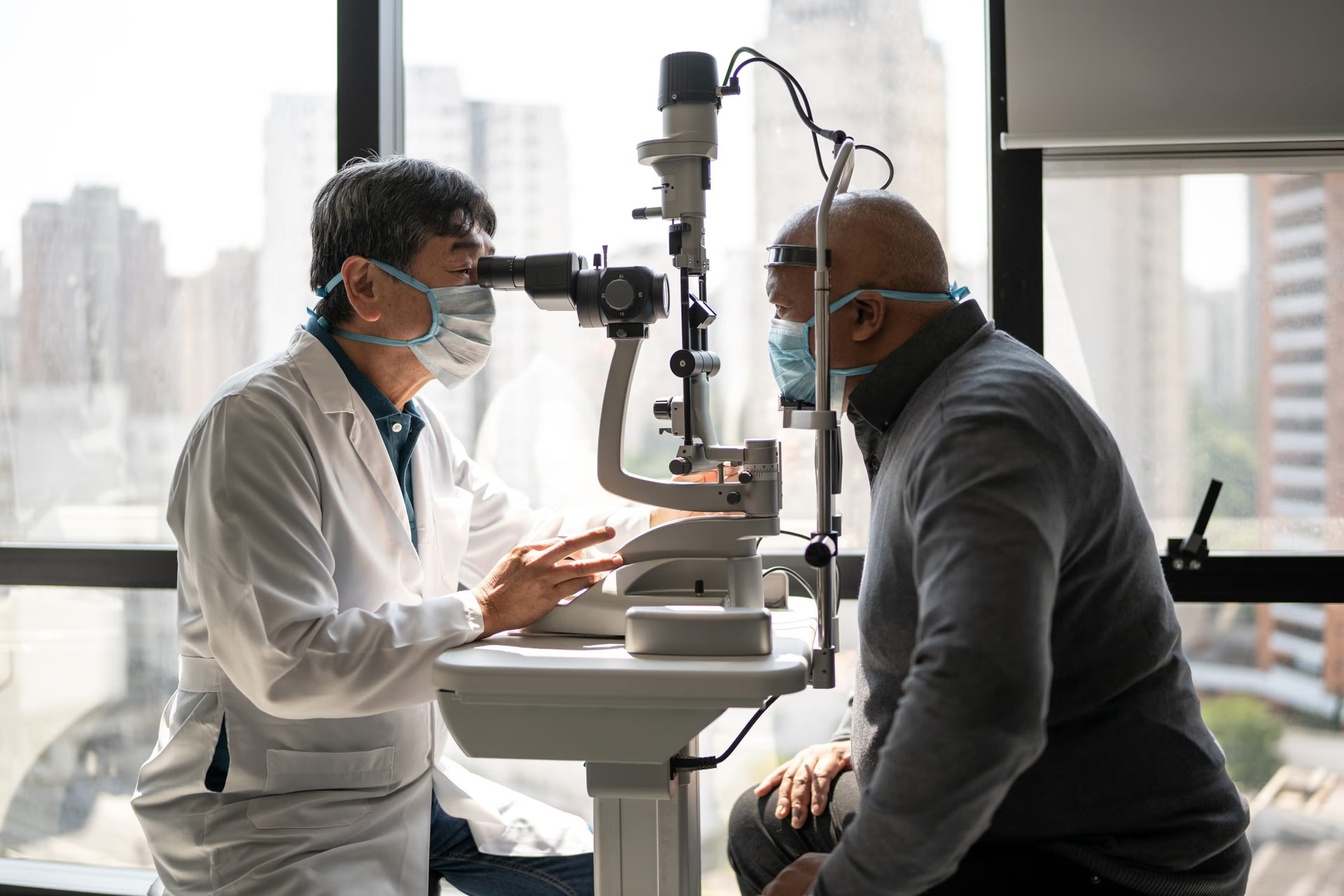
Laser vision correction has become an increasingly popular option for people who want to reduce their dependence on glasses or contact lenses. For patients considering Lasik Pretoria, understanding how the procedure works, who may be suitable, what recovery involves, and what results can realistically be expected is an important part of making an informed decision. Laser eye surgery is a medical procedure, so a thorough assessment by a qualified eye-care professional is essential before deciding whether it is appropriate.
Understanding Laser Vision Correction
LASIK, which stands for laser-assisted in situ keratomileusis, is a type of refractive eye surgery designed to correct common vision problems such as short-sightedness, long-sightedness, and astigmatism. The procedure reshapes the cornea, which is the transparent front surface of the eye, so that incoming light can focus more accurately on the retina.
The goal is to improve unaided vision and reduce the need for corrective lenses. However, LASIK is not suitable for everyone, and the expected outcome can vary according to factors such as age, eye health, corneal thickness, prescription stability, and general medical history.
Who May Be Suitable for LASIK?
A detailed eye examination is one of the most important steps before laser vision correction. During the assessment, the eye specialist may evaluate the patient’s prescription, corneal shape and thickness, tear production, eye pressure, and overall eye health.
Patients are generally expected to have a stable prescription before surgery. Certain eye conditions or corneal abnormalities may make LASIK unsuitable or may require an alternative treatment. People with dry eyes, previous eye surgery, certain autoimmune conditions, or other health concerns may require additional evaluation.
Age is another consideration. While LASIK can provide excellent results for appropriately selected adults, natural changes in vision can occur with ageing. Presbyopia, for example, commonly develops later in adulthood and can affect the ability to focus on nearby objects. Laser correction does not necessarily prevent these natural age-related changes.
What Happens During the Procedure?
LASIK is usually performed as an outpatient procedure. Before treatment, numbing eye drops are applied to minimise discomfort. The surgeon then creates a very thin corneal flap or uses a technique appropriate to the selected laser procedure. A laser is used to reshape the underlying corneal tissue according to the patient’s prescription.
The flap is then repositioned, where it generally settles naturally without traditional stitches. The entire treatment can be relatively quick, although the exact duration depends on the procedure and individual circumstances.
Patients should arrange suitable transportation after surgery because vision may be temporarily blurred or uncomfortable immediately afterwards. Following the surgeon’s instructions is essential for protecting the eyes during the early healing period.
Preparing for Laser Eye Surgery
Good preparation can help make the treatment and recovery process smoother. Patients should discuss their complete eye history with their specialist and provide information about previous surgeries, medications, allergies, and existing eye symptoms.
Contact lens wearers may need to stop using lenses for a period before their assessment because lenses can temporarily alter the shape of the cornea. The required period varies according to the type of contact lenses being worn, so patients should follow the instructions provided by their eye-care professional.
It is also important to have realistic expectations. LASIK can reduce dependence on glasses or contact lenses, but it does not guarantee perfect vision for every patient. A professional consultation is therefore more valuable than relying solely on online descriptions or experiences from other people.
Understanding the Benefits
One of the main attractions of laser vision correction is the potential for clearer unaided vision. People who regularly participate in sports, travel frequently, or find contact lenses inconvenient may appreciate greater freedom from corrective eyewear.
Some patients experience significant improvement in vision shortly after treatment, while others require more time for their eyes to stabilise. Results can depend on the original prescription and individual healing response.
Another benefit is convenience. Reducing dependence on glasses or contact lenses can make everyday activities simpler. Nevertheless, patients should understand that future vision changes can still occur, and some people may eventually need glasses for particular activities.
Possible Risks and Side Effects
Although LASIK has a strong history of successful outcomes, it is still surgery and carries potential risks. Temporary dry eyes, glare, halos, fluctuating vision, light sensitivity, and discomfort can occur during recovery. Some patients may experience visual symptoms that persist for longer periods.
More serious complications are uncommon but can occur. This is why careful screening and appropriate follow-up are essential. Patients should promptly contact their eye specialist if they experience significant pain, sudden deterioration in vision, increasing redness, or other concerning symptoms after surgery.
The best candidate is not simply someone who wants to stop wearing glasses. Suitability depends on the health and structure of the eyes as well as individual expectations.
LASIK Compared With Other Eye Procedures
LASIK is only one option within modern eye care. Depending on a patient’s circumstances, other laser or lens-based procedures may be considered. The appropriate choice depends on factors such as corneal characteristics, prescription, age, and existing eye conditions.
It is also important to distinguish refractive surgery from procedures used to treat eye diseases. For example, cataract surgery South Africa is performed to remove a cloudy natural lens and replace it with an artificial intraocular lens. Cataract surgery and LASIK therefore address different vision problems, even though both can improve visual function.
Patients should avoid assuming that one procedure is automatically better than another. A comprehensive assessment helps determine which treatment, if any, is appropriate.
Recovery and Aftercare
Following LASIK, patients receive specific instructions regarding eye drops, eye protection, physical activity, and follow-up appointments. Rubbing the eyes should generally be avoided during the healing period. Patients may also be advised to protect their eyes while sleeping and avoid activities that could expose them to dust, water, or accidental impact.
Vision can fluctuate during the early recovery period. Some people return to many normal activities relatively quickly, while others need additional time before their vision becomes stable.
Regular follow-up appointments allow the eye specialist to monitor healing and identify potential problems early. Patients should use prescribed medication exactly as directed and attend all recommended examinations.
Choosing the Right Eye Specialist
Selecting an experienced and appropriately qualified eye surgeon is one of the most important decisions when considering laser vision correction. Patients should ask about the surgeon’s qualifications, experience with the relevant procedure, assessment process, potential risks, expected outcomes, and follow-up arrangements.
A responsible consultation should involve more than discussing the benefits of surgery. It should also cover limitations, possible complications, alternative treatments, and whether the patient is actually a suitable candidate.
Patients considering Lasik Pretoria should therefore focus on comprehensive eye care rather than choosing a procedure based only on price or promotional claims.
Making an Informed Decision
Laser vision correction can provide meaningful improvements in visual freedom for carefully selected patients. However, every person’s eyes are different, and the decision should be based on an individual medical assessment rather than general expectations.
Understanding the procedure, preparing appropriately, recognising possible risks, and following post-operative instructions can all contribute to a safer treatment experience. Whether someone is exploring LASIK for convenience or seeking alternatives to corrective lenses, professional guidance remains essential.
For anyone considering Lasik Pretoria, the first step should be a detailed consultation with a qualified eye-care professional. A thorough examination can determine whether laser vision correction is appropriate and help the patient understand what results can realistically be expected from treatment.