
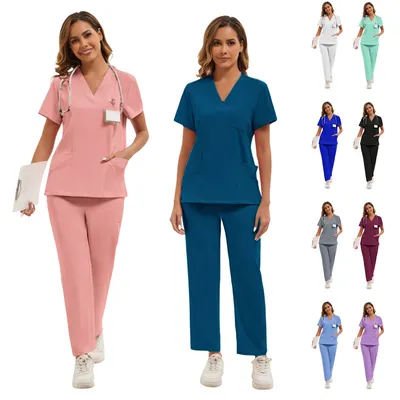
The global healthcare industry relies on strict standards of hygiene, comfort, and professional identity. At the center of daily medical operations are hospital garments, where quality and function directly impact performance. Modern healthcare facilities and medical apparel brands increasingly turn to specialized original equipment manufacturing (OEM) solutions to meet diverse workplace demands. Sanxia OEM scrubs represent this shift, demonstrating how custom manufacturing supports the creation of specialized, durable, and tailored medical uniforms.
Through OEM production, hospitals, clinics, and workwear brands can design apparel that meets precise functional requirements without managing complex manufacturing infrastructure. Custom healthcare uniforms require a fine balance between technical fabric performance, ergonomic construction, and brand identity—all of which are delivered through dedicated OEM channels.
Understanding the Role of OEM in Healthcare Apparel
Original Equipment Manufacturing allows brands and healthcare organizations to outsource production to specialized textile manufacturers while retaining control over design, specifications, and branding. In medical workwear, this process goes beyond basic garment assembly to encompass advanced material sourcing, functional patterning, and strict quality control.
Tailored Fabric Engineering and Material Selection
Standard off-the-shelf scrubs often fail to meet the varied demands of modern medical environments. High-stress departments such as emergency rooms, surgical suites, and outpatient clinics each require different performance features from their apparel.
By leveraging OEM manufacturing, organizations can select specialized textiles engineered for specific medical tasks:
- Antimicrobial and Fluid-Resistant Fabrics: Essential for infection control, advanced textile coatings prevent fluid absorption and limit bacterial proliferation on garments.
- 4-Way Stretch Blends: Combining synthetic fibers like polyester and spandex with rayon or cotton ensures full mobility during long shifts while maintaining breathability.
- Durability and Color Retention: OEM processes utilize commercial-grade dyes and high-tensile fabrics designed to withstand repeated high-temperature industrial laundering without fading or shrinking.
Through OEM partnerships, buyers can request custom fabric compositions tailored to their climate, department needs, and laundering standards.
Ergonomic Design and Functional Customization
Healthcare professionals spend long hours moving, lifting, and performing precise tasks. Custom OEM production focuses heavily on ergonomic construction to maximize mobility and daily utility.
Key functional features integrated during custom manufacturing include:
- Strategic Pocket Placement: Deep cargo pockets, secure zippered compartments, and dedicated slots for scissors, pens, and mobile devices keep essentials accessible.
- Reinforced Seams and Stress Points: Double-needle stitching and bar-tack reinforcement at key stress zones prevent tears during heavy use.
- Tailored Fits: Moving away from boxy, traditional scrubs, custom manufacturing offers modern athletic fits, maternity options, and unisex sizing to suit diverse workforce demographics.
The Strategic Advantages of Customizing Healthcare Uniforms
Investing in custom healthcare uniforms provides substantial operational and brand benefits for hospital networks, private clinics, and medical retail brands.
Brand Identity and Professional Aesthetics
Uniformity across medical staff fosters patient trust and establishes a strong organizational presence. Sanxia OEM scrubs enable institutions to embed their unique visual identity directly into their workwear.
Custom branding options available through OEM production include:
- Custom Color Matching: Aligning scrub colors with corporate or department branding to facilitate clear role identification (e.g., surgical staff in teal, nursing in navy, pediatric teams in soft hues).
- Direct Embroidery and Heat Transfers: Adding crisp facility logos, department titles, and staff names directly during production ensures long-lasting professional presentation.
- Custom Trims and Labels: Woven brand tags, custom drawstrings, and branded metal snaps enhance product distinction for commercial scrub lines.
Department-Specific Functionality
A single facility often houses multiple departments with distinct operational needs. OEM manufacturing allows administrators to order specialized garment variations under one production agreement. For instance, pediatric teams may request softer, stain-resistant fabrics in bright palettes, while surgical technicians require minimalist designs with sterile barrier properties.
The OEM Manufacturing Process: From Concept to Delivery
Developing custom medical apparel through an OEM partner involves a structured production cycle designed to maintain consistency and compliance.
Pattern Development and Prototyping
The journey begins with technical tech packs and pattern drafting. Designers translate initial concepts into detailed production guides outlining fabric weights, measurements, trim specifications, and stitch density. Pre-production samples are created and rigorously evaluated for fit, comfort, and durability before mass assembly begins.
Precision Cutting and Assembly
Once samples pass quality inspection, automated cutting machines process high volumes of fabric with minimal waste and high dimensional accuracy. Skilled textile workers assemble the components using specialized industrial sewing equipment to maintain consistent seam strength across thousands of units.
Quality Assurance and Compliance
Medical garments are subject to strict standards. Quality control teams inspect goods at multiple stages:
- Raw Material Verification: Testing fabrics for colorfastness, tear strength, and chemical safety.
- In-Line Sewing Audits: Monitoring stitch density, seam alignment, and pocket placement during production.
- Final Inspection and Packaging: Conducting random AQL (Acceptable Quality Limit) sampling, checking thread trimmings, and organizing garments into labeled, distribution-ready packaging.
Economic and Operational Benefits of Bulk OEM Production
Partnering with an established OEM manufacturer provides notable cost efficiencies and supply chain stability for large buyers.
Economies of Scale
Bulk production significantly lowers unit costs. OEM facilities streamline material sourcing and automated manufacturing to deliver high-volume orders at competitive prices, making custom uniform programs cost-effective for large healthcare networks.
Reliable Supply Chain Management
Managing uniform programs internally can strain administrative resources. OEM partners maintain steady access to raw materials and established logistics networks, ensuring timely delivery for seasonal restocks, new staff onboarding, or facility expansions.
Driving Modernization in Healthcare Workwear
The medical apparel industry continues to evolve as healthcare providers prioritize staff comfort and brand representation. Modern OEM production bridges the gap between functional workwear and modern apparel design. By utilizing customized solutions like Sanxia OEM scrubs, healthcare institutions and commercial brands secure high-performance, durable, and visually distinctive uniforms that support healthcare professionals throughout their daily work.